
Dimitra DeFotis
Senior EditorEyes on Warsh Speech as Tech Tops S&P Weekly Sector Performance
Dimitra DeFotis
Senior EditorLooking back at the week, Nvidia (NVDA) earnings dominated and the information technology sector advanced more than any other sector in the S&P 500 Index.
On Thursday, despite overall market gains, all S&P 500 sectors were in the red except IT, which rose 3.4% on the day. That brings IT's week-to-date returns to 3.12%. For the week through Thursday, only Utilities (up 0.96%) and Financials (up 0.72%) are ahead. With U.S. benchmark crude prices down nearly 5% for the week to roughly $82.50 per barrel, the S&P Energy sector is down 2.54%, making it the worst performing sector of the week. Healthcare declined 1.76%, Consumer Discretionary is down 1.61%, and Consumer Staples is off by 1.04%.
With oil up roughly 44% year to date, and stubborn inflation evidenced in this week's PCE data, traders including the bulls are focused on interest rates.
Treasury yields are slightly higher Friday morning
Investors await the highly anticipated 10 a.m. ET keynote speech from Federal Reserve Chairman Kevin Warsh at the Fed's Jackson Hole conference. The benchmark 10-Year yield is at 4.68% and has fallen 5 basis points this week after hitting above 4.74% last Friday. The pullback in yields this week and consolidation under 4.7% on the 10-Year has helped support equities this week.
On Wednesday, the Bureau of Economic Analysis reported that the July 2026 headline PCE inflation rose 3.7% year-over-year, coming in slightly hotter than market forecasts. The Core was up 3.3% year-over-year, which was in line with estimates. The data reflects that inflation remains elevated above the Fed’s target goal of 2%, but the inflation print had little impact on equity markets this week.
Warsh’s remarks will be closely watched for any views on monetary policy, clarity on his task forces, and his thoughts on inflation. Expectations of a rate hike at the Fed’s September meeting are at about 35% according to the CME FedWatch tool, but that could change quickly based on Warsh’s comments this morning.
Inflows to Crypto, Emerging Markets, and Tech
For the week ended July 24, roughly $33.9 billion in cash moved to stocks, bonds, gold and crypto, with the more than $900 million crypto inflow being the biggest in 11 weeks, according to Bank of America's weekly study of net fund flows. This week, Bitcoin has had another good week, up about 3% through Thursday. See Crypto Investors Await Clarity Act as Bitcoin, Ethereum Hold Rally
Also, notable: it was the second largest inflow ever into emerging market equities, at $29.6B, with record inflows into China and Korea stocks, according to BofA. This week, the iShares MSCI Emerging Markets ETF (EEM) was up 0.73% through Thursday.
The tech trade was slower, with $4B in inflows, but BofA noted that the record $52.8B inflow into tech over the past four weeks is fueling the bullishness in the firm's Bull & Bear Indicator. That brings us to Nvidia's report.
Nvidia (NVDA) Earnings Enthusiasm Redirects Markets
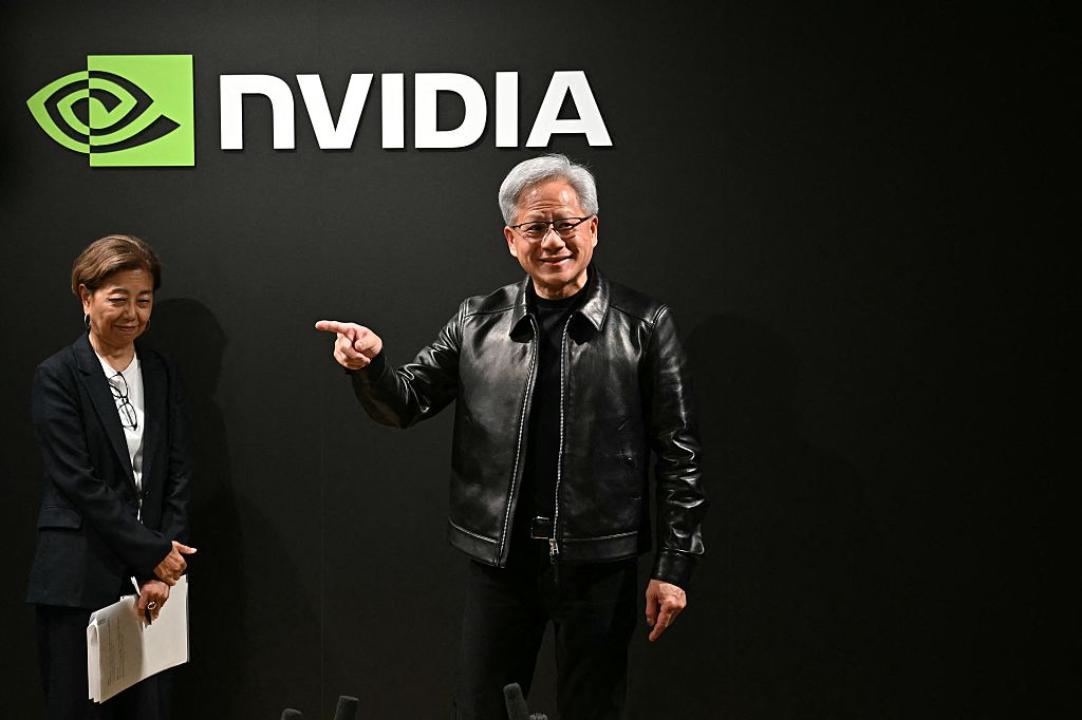
Nvidia shares are up more than 6% this week, including an 8.7% jump Thursday following blockbuster earnings with higher guidance from the advanced AI computer chip designer after the bell Wednesday. The report may have dispelled some angst about artificial intelligence spending and the chip trade: The PHLX Semiconductor Index (SOX) is in the green for the week, up 1.2%.
Nvidia smashed expectations with adjusted earnings per share of $2.22 against the $2.09 estimate and also posted a hefty revenue beat of $96.2 billion vs. the $91.85 billion estimate, a 106% increase year-over-year and an 18% jump from the previous quarter. As for guidance, CFO Colette Kress said the company expected fiscal 2028 revenue growth of 70%, far beyond the 45% increase analysts expected.
In reiterating a Buy rating and $350 price target on Nvidia shares, Bank of America summed it up: one thing to watch is gross margins, which sit at 75% as of the latest quarter. Nvidia management reset the gross margin outlook, with a 71% to 72% bottom in fiscal Q4 2027 and 72% to 73% for fiscal 2028, given rising memory costs. But "management delivered a compelling vision of how strategic investments help NVDA secure its dominance in this once-in-a-generation AI buildout."
See Schwab Network Technology coverage for many interviews on Nvidia results, artificial intelligence and other tech companies reporting results.
Tom White contributed to this article
Featured Clips
NVDA Blowout Quarter Backs AI Trade Strength, Memory Remains Lasting Headwind
Opening Bell With Nicole Petallides
► Play videoThursday's Final Takeaways: U.S. & Asian AI Memory Stocks Diverge, Fed Rate Divide Widens
Market On Close
► Play video