Thomas White
Co-HostMarket Minute: A New Sheriff in Town, and His Name is Fed Chair Kevin Warsh!
Thomas White
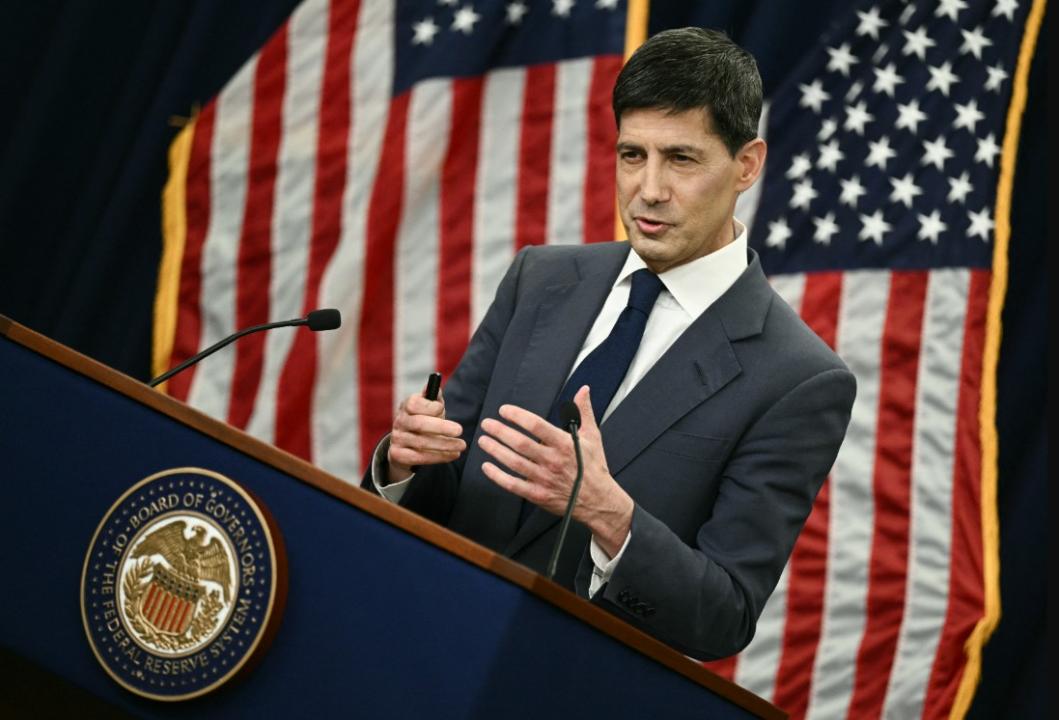
Co-HostThe Federal Reserve held interest rates steady Wednesday, but the first meeting under new Chair Kevin Warsh signaled a meaningful shift in both policy tone and communication strategy that could shape markets in the near-term.
It was investors’ first look at regime change for the Fed, and the initial market reaction was to the downside for stocks. The June meeting was a pivot from recent offerings from the Fed, but this may be warranted as inflation has been above its 2% mandate for the last five years. As Warsh moves away from the status quo, investors will be along for the ride, and markets may be in for some added uncertainty at least in the near-term.
The Federal Open Market Committee voted unanimously to keep the benchmark federal funds rate in a range of 3.50% to 3.75%, a move that had been widely expected. While the decision itself was largely a non-event, the Warsh-led press conference that followed served up some key changes pointed to a growing willingness to tighten policy further if inflation does not improve, with nearly half of Fed officials signaling support for a rate hike later this year.
Stocks Sell Off on Hawkish Tilt
The selloff in stocks on Wednesday afternoon reflected a hawkish tilt that signaled the central bank’s ongoing struggle with inflation, which remains well above the Fed’s long-standing 2% target. The S&P 500 finished Wednesday down 1.2% and the tech heavy Nasdaq-100 fell 1% as selling picked up into the closing bell. Warsh underscored a somewhat hawkish tone in his remarks, acknowledging that inflation has been running elevated for five years and remains a burden on consumers. At the same time, he emphasized that the committee is united in its mission, stating clearly that the Fed “will deliver price stability,” reinforcing expectations that fighting inflation will remain the dominant policy objective.
Regime Change Brings Communication Shifts
Changes are coming according to Warsh, with a shift in Fed communication. Breaking from recent years, the central bank released a significantly shorter and more stripped-down policy statement. Warsh described the change as intentional, saying the statement is “a bit shorter, a bit simpler” and designed to provide facts rather than steer market expectations. The revised statement also dropped language that had previously suggested a bias toward rate cuts, reinforcing the idea that easing is no longer the baseline scenario.
Warsh, as expected, did not give any guidance for rate expectations as he distanced himself from one of the Fed’s most closely watched communication tools, the “dot plot” of multiple committee members’ rate estimates. In his first meeting as chair, he chose not to submit his own rate projections, arguing that such forecasts are “not helpful in the conduct of policy.” That decision takes away some transparency that was communicated recently from the Fed. But this may be viewed as a benefit; previous dot plots were often far from what was realized. Instead, Warsh appears to favor a more flexible approach that allows policymakers to respond to incoming data without being tied to prior projections.
This broader rethink of communication is part of what many are viewing as the beginning of a new regime at the central bank. Warsh announced the creation of multiple task forces aimed at reviewing key elements of the Fed’s operations, including its communication practices, inflation framework, and balance sheet strategy. Warsh has been critical of the Fed over the last several years and is looking to finally get ahold of the perceived missteps in how policy is formulated and implemented. His emphasis is now on reducing market reliance on forward guidance and increasing the Fed’s room to maneuver.
Interest rates: Higher for Longer?
As usual, markets reacted more to the shift in commentary than to the rate decision itself. The removal of forward guidance and the indication that rate hikes remain on the table reinforced a “higher-for-longer” theme. With policymakers pulling back on communication and guidance, markets may be setting up for additional volatility after future meetings.
Kevin Warsh is the new Sheriff for the Fed and may continue to move away from the recent status quo on many fronts.
Featured Clips
Warsh 'Changing Narrative' for Fed, U.S-Iran MOU Details, INTC & AAPL Deal
Morning Movers
► Play video