
George Tsilis
Sr. Markets CorrespondentWaiting for Direction: Markets Finish 2025 in a Holding Pattern
George Tsilis
Sr. Markets CorrespondentThe final trading week of 2025 ended with markets in a familiar holding pattern, as thin liquidity, low volatility, and internal divergences continued to define the tape. While the S&P 500 briefly pushed to fresh highs last week, the move lacked confirmation from volume, breadth, and growth-oriented benchmarks, reinforcing the sense that equities remain range-bound rather than poised for a durable breakout.
That lack of conviction was evident in price action. The S&P 500’s push to new highs came on notably light volume and quickly stalled, a classic late-December “false breakout” pattern. Rather than accelerating, the index slipped back toward the middle of its recent range, underscoring how difficult it has been for stocks to generate momentum in a low-volatility environment. The VIX reinforced that message, remaining pinned in the mid-teens and signaling neither stress nor enthusiasm, but rather just complacent calm.
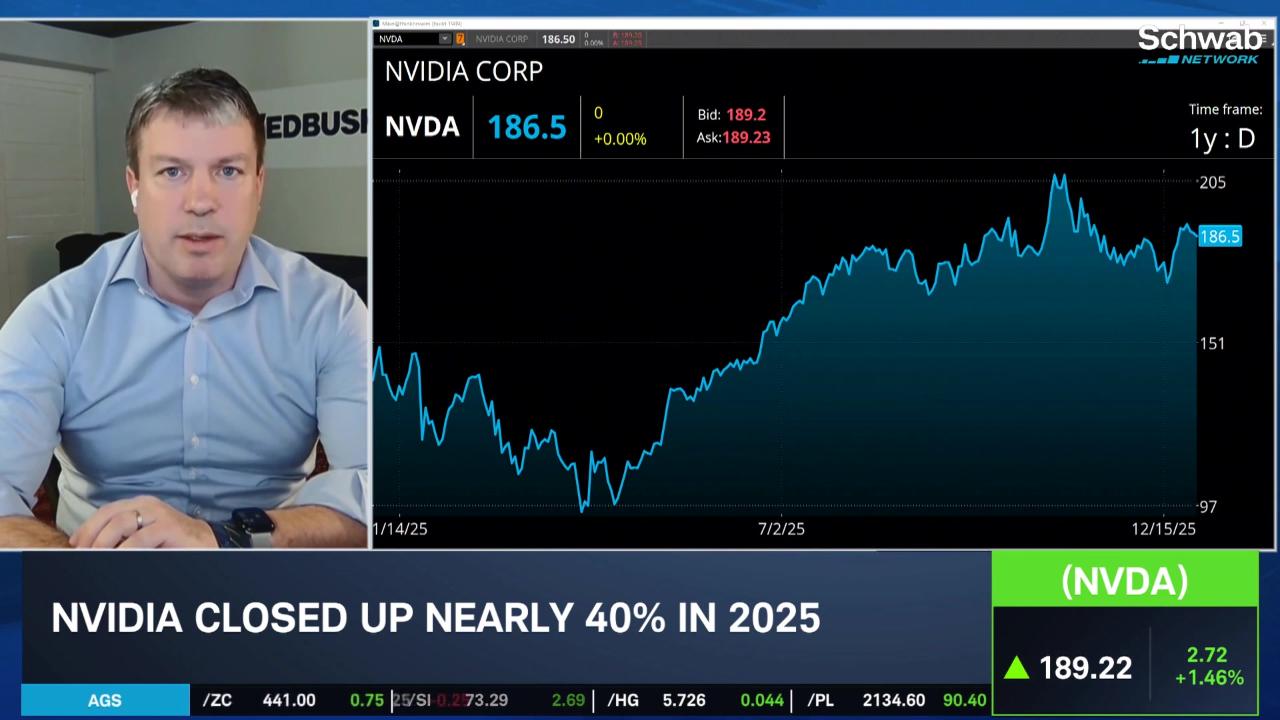
Beneath the surface, divergences have widened. The Nasdaq has underperformed the S&P 500 meaningfully, weighed down by ongoing weakness in mega-cap technology. After carrying the market for much of the year, several of the largest growth names continued to see steady selling as investors locked in gains and avoided adding exposure into year-end. The pullback was orderly but persistent, and it left the Nasdaq unable to confirm the S&P 500’s highs which may be a notable warning sign for market breadth.
Small caps offered little offset. The Russell 2000 lagged throughout the week, giving back some of the December gains that had followed the Fed’s rate cut earlier in the month. With Treasury yields stabilizing and liquidity thin, enthusiasm for smaller, more cyclical companies faded. The underperformance suggests that investors remain cautious about growth leverage and are not yet convinced that easier policy alone will drive a sustained small-cap resurgence.
Sector performance echoed that caution. Defensive and cash-flow-oriented areas held up best, while technology and materials softened. Financials were mixed, supported by a still-steeper yield curve but constrained by year-end positioning and profit-taking. Materials, which had been among December’s strongest groups, pulled back as the metals complex cooled. Gold, silver, and copper all retreated modestly after strong prior runs, reflecting profit-taking rather than a fundamental shift in demand. Energy remained under pressure as crude oil prices stayed soft on surplus concerns and uneven global consumption signals.
Midweek, investors also digested the latest Federal Reserve FOMC meeting minutes, which added a layer of nuance to the otherwise quiet tape. The minutes showed policymakers broadly comfortable with the recent rate cut but emphasized caution about moving too quickly in 2026. Several participants flagged lingering uncertainty around inflation data quality following the government shutdown, while others noted that financial conditions have eased materially and may already be doing some of the Fed’s work. The takeaway for markets was subtle: the Fed is easing, but it is not on autopilot, and future cuts will remain firmly data-dependent.
That message aligned neatly with market behavior. With policy risk temporarily reduced but not eliminated, investors appeared content to manage positions rather than chase returns. Since October, equities have oscillated within a narrow range characterized by low volatility, repeated marginal highs, and a lack of sustained follow-through. Pullbacks have been shallow and quickly stabilized, while rallies have struggled to gain traction—an environment well-suited to rotation but hostile to trend-following.
As 2025 came to a close, the signal from markets was less about imminent downside and more about unresolved direction. The S&P 500 ended the year near record levels, but persistent divergences with the Nasdaq and Russell 2000, weakness in mega-cap tech, cooling momentum in commodities, and caution embedded in the Fed’s own minutes all argue for patience. The next durable move will likely require either a reacceleration in growth confidence or a clearer policy catalyst.
Featured Clips