
Kevin Green
Sr. Markets CorrespondentWhy the Treasury Is Buying Back Government Debt as Long-Term Yields Surge
Kevin Green
Sr. Markets CorrespondentLonger-dated Treasury yields — the 10-year to 30-year in particular — continue to climb, irrespective of the U.S. Treasury's announced bond buyback program.
That seems counterintuitive given the program's stated intent, and it raises the possibility that the bond market is testing the authority of Treasury Secretary Scott Bessent. That kind of pushback isn't unusual. But it's worth stepping back to the basics: what is the Treasury buyback program, how does it work, what has it traditionally been used for, and why might the market be reacting so poorly to this version of it?
Wednesday's Treasury Repurchase Announcement
On Wednesday, the Treasury said it will repurchase up to $6 billion of long-dated debt across 10-year and 20-year maturities, expanding on its August 19 guidance that buyback operations would increase from $2 billion to at least $4 billion per operation.
The 10-year Treasury yield briefly topped 4.85% following the announcement, in part because the latest repurchase figure nearly tripled the previously announced $2 billion level. The Treasury appears to be attempting a light version of "yield curve control," but the market isn't buying it — at least not yet. The first buyback operation is set to run today for approximately 20 minutes and conclude by 2 p.m. ET.
Why Traders Are Uneasy
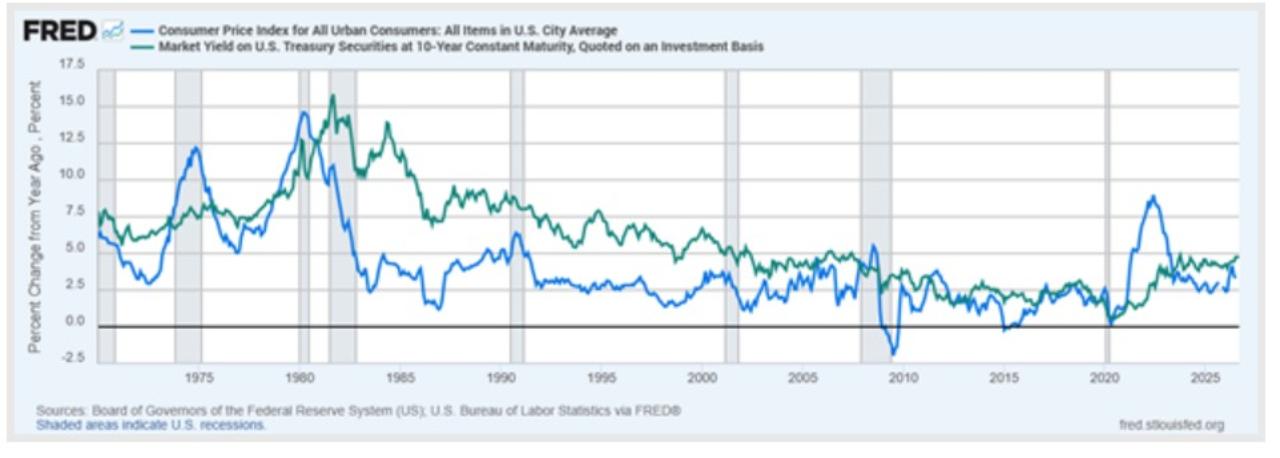
Treasury yields generally track inflation trends, and with energy prices climbing on global geopolitical risk, yields have moved up in step. This rise in yield is partly on concern that the Federal Reserve may need to raise rates to keep inflation in check. (See chart. Image Source: U.S. Bureau of Labor Statistics, Consumer Price Index for All Urban Consumers: All Items in U.S. City Average [CPIAUCSL], retrieved from FRED, Federal Reserve Bank of St. Louis; Sept. 9, 2026 https://fred.stlouisfed.org/series/CPIAUCSL)
The problem, at least for now, and the reason many traders are concerned, is that yields appear to be rising for reasons other than a lack of liquidity.
A liquidity shortfall, the explanation Treasury officials keep pointing to, is usually a symptom of some kind of credit crunch, credit event, or lack of issuance. Instead, two other forces appear to be driving yields higher: the size of the U.S. debt load and inflation fears.
Why the Treasury Issues Debt — and Buys It Back
The U.S. Treasury issues debt to finance the operations of the federal government, and over time, government debt levels have ballooned substantially. Treasury yields are priced based on several factors — inflation, debt coverage ratios, economic growth, and competition from other sovereign issuers.
The buyback program works by the Treasury deploying cash to repurchase older Treasury securities, which are usually higher-yielding maturities, already in the market. The U.S. Treasury market is one of the most liquid in the world, particularly at the short end — T-bills with maturities of up to one year, up to 2-year notes. Shorter-duration debt typically carries a lower yield, meaning the government pays less interest on it, not including refunding costs. Further out on the "long end of the curve,” a phrase that simply refers to longer-dated maturities — secondary market activity tends to be thinner, and yields are traditionally higher. That means the government pays more in interest on longer-dated debt than shorter-dated debt, depending on when it was issued.
Through the buyback, the Treasury can use available cash to purchase and effectively "retire" older, higher-cost long-dated debt, saving money on its interest expenses.
The program also carries symbolic weight, which may be one of the main reasons Secretary Bessent is pushing to implement it. If the market believes the Treasury is actively buying back a given series of longer-dated maturities, that activity can help put a soft cap on yields for those securities. Think of the old adage, "Don't fight the Fed." This is, in effect, an attempt to establish, "Don't fight the Treasury." See Inflation Data and the Fed Keep the Market's Attention | Market On Close
Why This Time Is Different
Treasury buybacks aren't new, but this round stands out for a few reasons: there's no financial crisis underway, the Treasury's approach has been notably aggressive, and it's possible the yield curve is simply normalizing after nearly two decades of accommodative monetary policy.
Either way, the U.S. Treasury appears squarely focused on one mission: containing long-term yields.
Featured Clips
U.S. Treasury Readies Buyback Announcement as Crude Oil Moves Stock Market
Opening Bell With Nicole Petallides
► Play video