
Kevin Green
Sr. Markets CorrespondentEnergy and Oil Tanker Rates Continue to Move Higher
Kevin Green
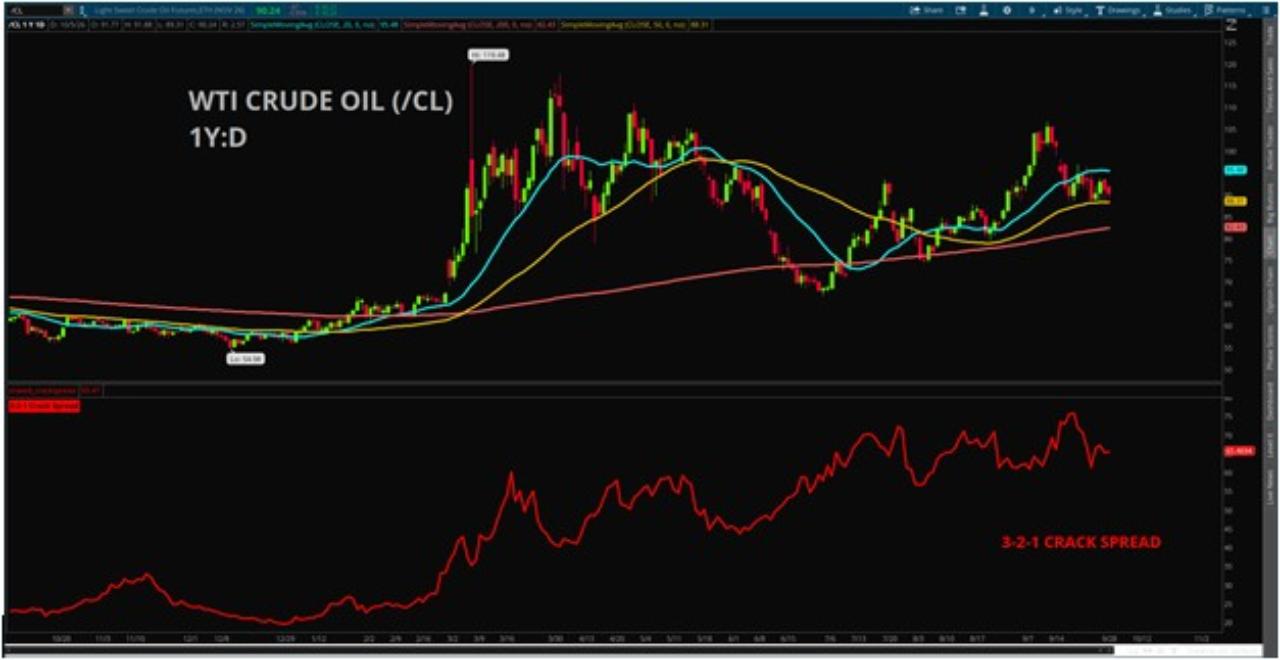
Sr. Markets CorrespondentAlthough the global oil benchmark, Brent crude (/BZ), has pulled back from the $110 level and has been consolidating for the last three weeks, the energy sector continues to show pockets of strength in key industries, at least for now.
Refining margins, as measured by indicators like the 3-2-1 crack spread, a metric that tracks the profitability of converting three barrels of crude into two barrels of gasoline and one barrel of diesel or heating oil, remain elevated, providing fundamental support for refining equities. The bulk of refiners' profitability is coming from the premium earned on refining diesel. But one corner of the energy sector continues to make new relative highs: tanker rates.
With the Strait of Hormuz still contested, shipping routes remain disrupted. Even as oil flows improve slightly, the cost of moving crude and refined products like diesel keeps rising, and the risk to tankers remains elevated. The Amplify Breakwave Tanker Shipping ETF (BWET), which is benchmarked to crude oil tanker freight futures, hit a new all-time high on Friday.
Tanker rates may continue to climb this morning on news of more vessels being targeted near the Strait of Hormuz and a sharp rise in attacks near the Bab al-Mandab Strait over the weekend, according to United Kingdom Maritime Trade Operations (UKTMO) reports. The Bab al-Mandab Strait (the BAB) accounts for approximately 10% of global seaborne oil and around 8% of global LNG. As of now, the Houthis have targeted Saudi-affiliated ships while allowing European- and U.S.-affiliated ships to continue transiting the 20-mile strait. That may change over the coming days.
Adding to the tension, Yemeni government forces announced this morning that they have launched an offensive alongside the Saudi-led coalition to reclaim territory from the Houthis, according to Reuters, once again escalating risk in a region vital to energy and commodity traffic.
Given this fundamental backdrop, tanker-related stocks like Frontline (FRO), Teekay Tankers (TNK), and DHT Holdings (DHT) continue to show relative strength against the broader equity market.
Once under loved, the industry has now become a bigger focus for institutions looking to gain exposure to the energy trade. Unfortunately, the logistics crisis through both straits, resulting in tight tanker supply, shows no signs of easing anytime soon. That puts further pressure on refiners to secure feedstock and, ultimately, on retail prices at the pump.
For this week's economic and earnings calendar. see: Week Ahead: FOMC Minutes Kick Off Final Quarter of 2026
Also see: Week in Review: 10 Interviews on Markets, Rates, AI, and Volatility
Featured Clips
Gas 'Consumer Problem,' Diesel 'Economic Problem:' Adam Lampe on Energy Headwinds
Market On Close
► Play video