
Dimitra DeFotis
Senior EditorWill Natural Gas and Solar Compete to Meet AI Power Demand?
Dimitra DeFotis
Senior EditorPowering artificial intelligence and the computing behind queries and automation requires steady energy for data center electricity.
Tesla (TSLA) CEO Elon Musk praised solar, saying in a social post that it will “become by far the biggest source of power for civilization.” Tesla sells residential solar panels and power storage systems. The broader question is how solar could contribute as a source of power for data centers, which can vary in size and location.
Solar has gained ground as a source of U.S. power overall. EIA data show natural gas remained the largest U.S. electricity-generation source in 2025, at roughly 41%, while utility-scale solar was still a much smaller share, at about 7% of the six largest generation sources.
Natural gas futures (/NG) were trading near $2.93 per MMBtu early Wednesday, after holding below the spikes seen earlier in the year.
How do Solar and Natural Gas Fit into the U.S. Power Grid?
Energy infrastructure investors such as Tortoise Advisors have discussed natural gas as a significant U.S resource and backbone of the U.S. power grid. Renewables (wind, hydro, solar, biomass, and geothermal) have doubled as a source since the 1990s to 25% of U.S. power generation last year, but wind still dominates renewables, EIA data show. Nuclear is entrenched as an electricity power source at 18%, according to the EIA.
U.S. data centers consumed more than 4% of U.S. electricity in 2023, and that share could rise to 9% by 2030, according to the MIT Energy Initiative, which cited Electric Power Research Institute estimates. A 2025 EY-Parthenon report, citing Goldman Sachs research, said data centers could account for 40% to 80% of U.S. power-demand growth through 2030 and as much as 18% of U.S. power production. Data centers range from small, single-entity sites requiring less than 30 megawatts of power, to co-location facilities, hyperscalers and mega-scale generative AI locations requiring more than 1 gigawatt. See Standard Nuclear (STDN) CEO on U.S. Military Deal, Becoming Nuclear 'Gas Station'
What’s Old is New for AI and Energy Infrastructure
Rob Thummel, a senior portfolio manager at Tortoise Capital, said back in 2024 that “There’s no Artificial Intelligence (AI) without Energy Infrastructure (EI).” He also said energy infrastructure stocks have “big economic moats that Warren Buffett always talks about. It is difficult to build energy pipelines anywhere in the world. So the value of existing pipelines and the U.S. pipeline network is worth even more.”
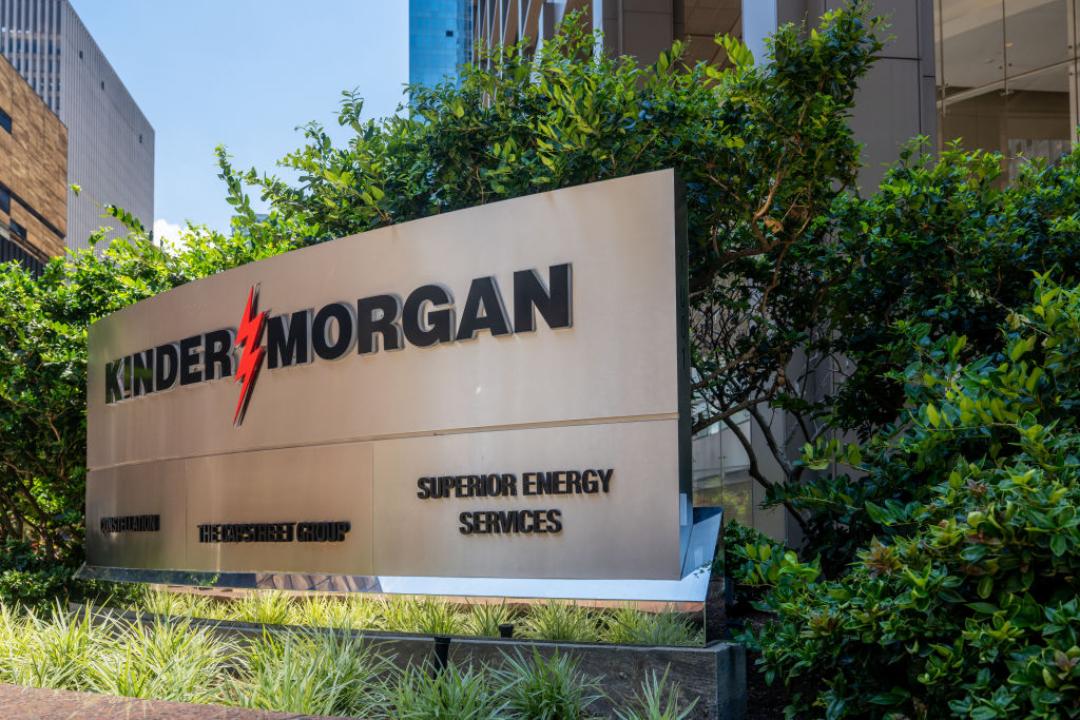
With natural gas pipeline networks connecting exploration and production sites to LNG facilities, utilities and storage hubs, natural gas infrastructure accounts for nearly half of the holdings in the Tortoise Energy Infrastructure Fund (TORTX), including The Williams Companies (WMB) and Kinder Morgan (KMI). Through Tuesday’s close, the fund is up nearly 28% year to date, while Williams is up 25% and Kinder Morgan is up nearly 17%. The Tortoise AI Infrastructure ETF (TCAI), up roughly 48% this year, includes U.S. utilities and infrastructure companies tied to natural gas, oil, renewables, nuclear power and data centers. See Rob Thummel on U.S. Opportunity in Oil Headwinds, Picks in VST, LNG & WMB
The holdings in the Tortoise AI Infrastructure ETF (TCAI) are largely digital infrastructure, followed by energy, and data centers. Its top holding is Dell Technologies (DELL), and Micron (MU) is among its top 10 holdings. It also owns Entergy (ETR) and Williams.
For investors, solar is a growing component of the energy mix to keep an eye on. Meanwhile, some energy pipeline and utility investments may offer income.
For this week's economic and earnings calendars, see Week Ahead: Big Week for Economic Data and Tech Earnings
Featured Clips
TSLA Hits Gas in EVs: What is Means for BYD, NIO, XPEV & China's Market
Morning Trade Live
► Play videoElectricity Is the New Oil: Rob Thummel on AI & the Next Energy Investment Wave
Opening Bell With Nicole Petallides
► Play video